Nivea
Nivea’s biophysicists and chemists brought me a problem most people would call impossible: a t-shirt that reads sweat with laboratory precision, survives the wash, comes in every size, and rolls off the line by the thousand.
A laboratory instrument you can throw in the wash.
A precision sensor and a mass-produced garment want opposite things — one demands exactness, the other forgives nothing. So I rebuilt the shirt from the pattern up: a new construction that made it manufacturable, a high-precision alloy pressed into service as the sensing element, a circuit redrawn for comfort against the skin, and a manufacturing road-map with partners I trusted to hold the tolerances. Five thousand shirts came off the line.
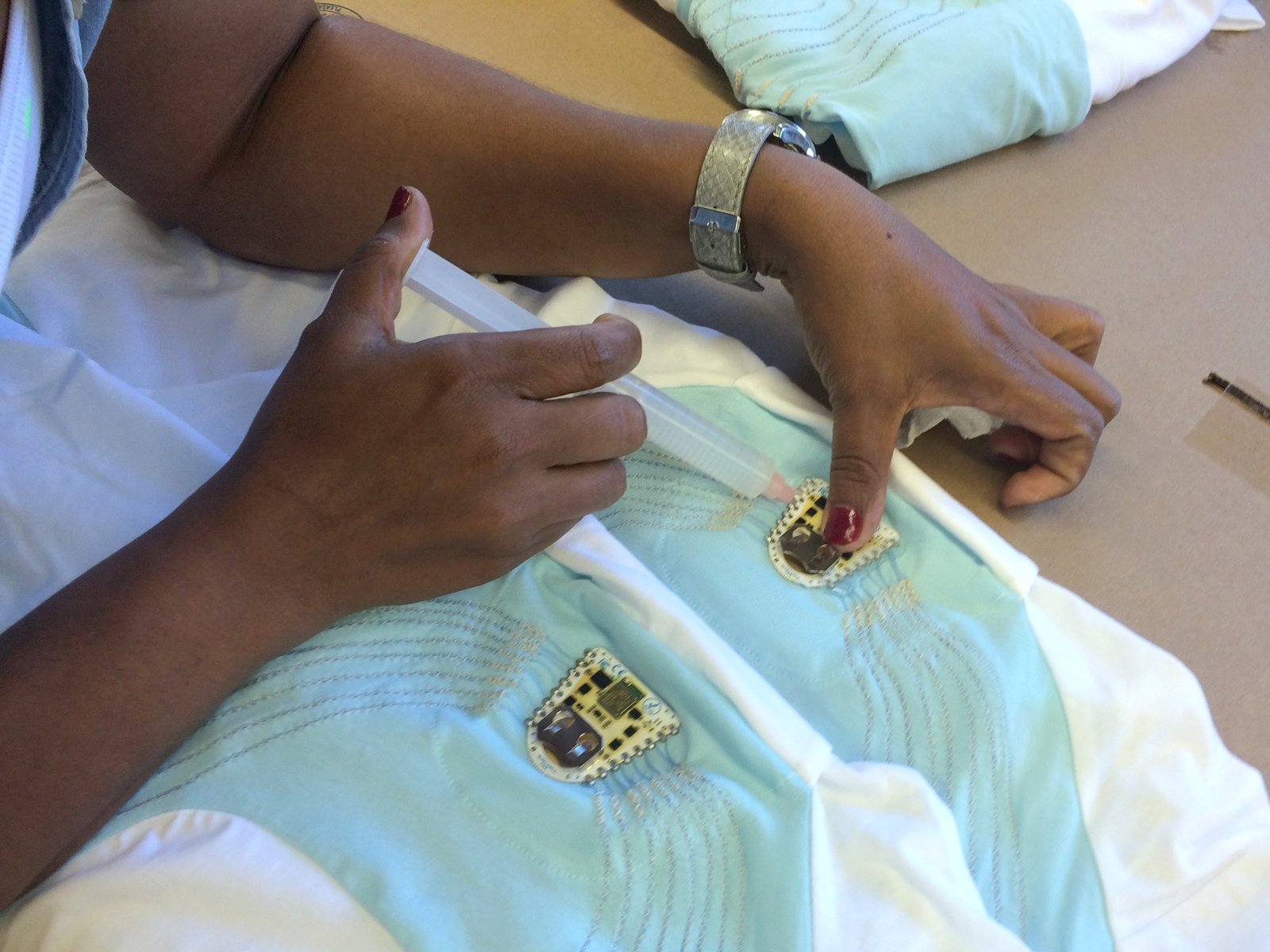
The shirt let Nivea run comprehensive field tests and gather data that proved valuable across every tier of the organisation, making science-backed marketing claims, while bringing siloed departments to work together — documented in the article “How Technology Generates Positive Ripple Effects for Nivea.”
← All work